When people think about survival skills, they usually think about stocking up on food or equipment. Unfortunately, many people find themselves in survival situations without knowing how to use the products they bought or how to be strategic. Having survival skills can come in handy in everyday situations, but they ultimately give you peace of mind. Whenever a disaster strikes, whether by nature or mankind, you want a feeling of calm over you, knowing you can handle it.
In a world where supply chains are fragile, and food insecurity is a growing concern, the ability to produce your own food and medicine is more than just a skill—it’s a necessity. As global uncertainties continue to rise, many people are turning to self-sufficiency to secure their basic needs and reduce reliance on external systems that can easily falter.
We’ve been living in an increasingly industrially reliant culture, and we’ve relied on fast food, disposable goods, and cheap gasoline. It’s been our normal for a very long time. But normal isn’t what it used to be. Enter Covid, and now we are seeing the consequences of this consumerist lifestyle. Food insecurity, shortages, and shipping bottlenecks show us how dependent we are on “the system.” Do you feel secure?
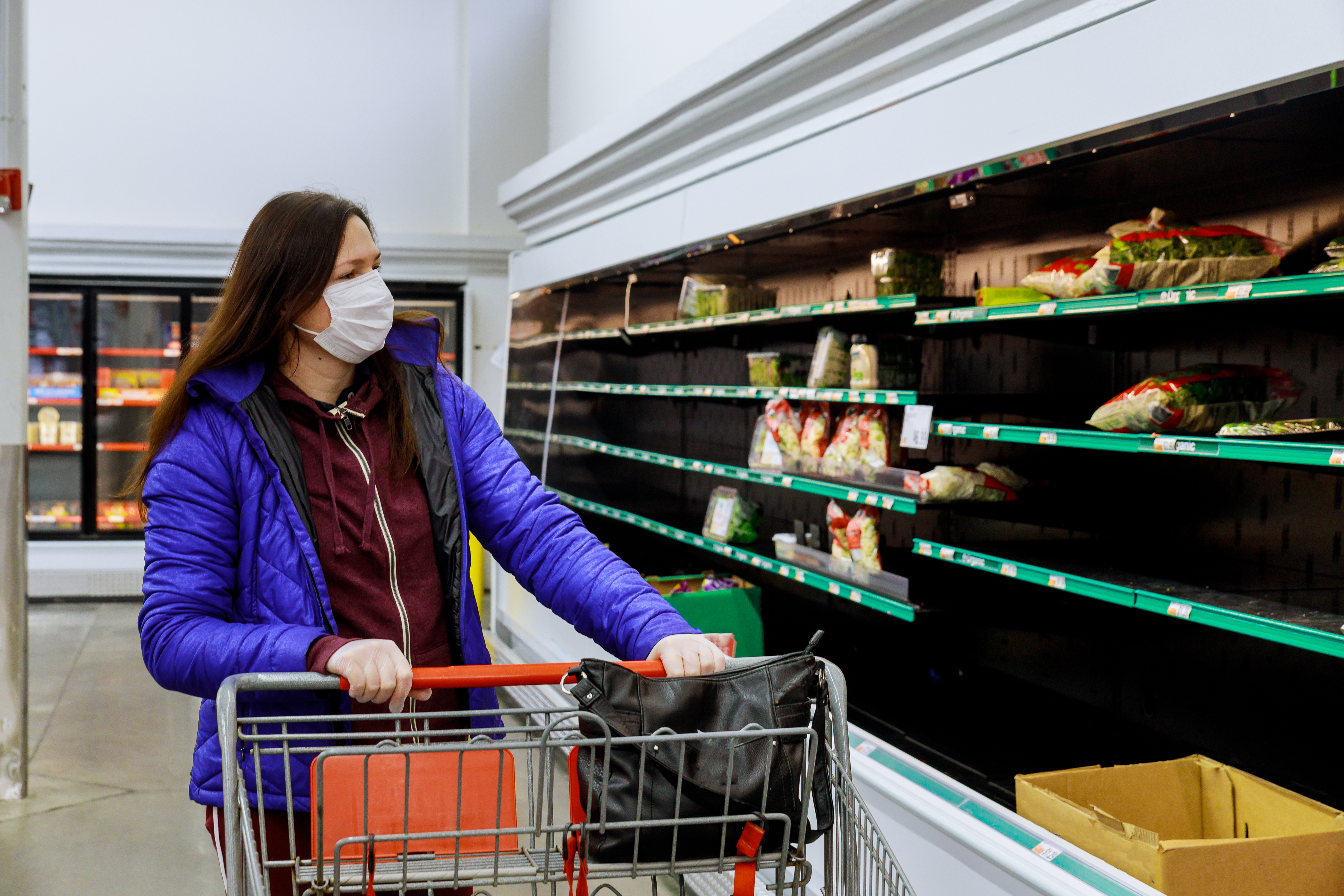
Woman with protection face mask and gloves shopping at supermarket.
When you start brainstorming prepper pantry ideas, you probably think about food. As a prepper, the biggest and most immediate concern is starvation. However, there are a lot more things you’ll need in a catastrophic emergency situation. You need tools to prepare the food, medical supplies, ways to keep up with hygiene, and more! Keep reading for 7 things to keep on hand beyond food.
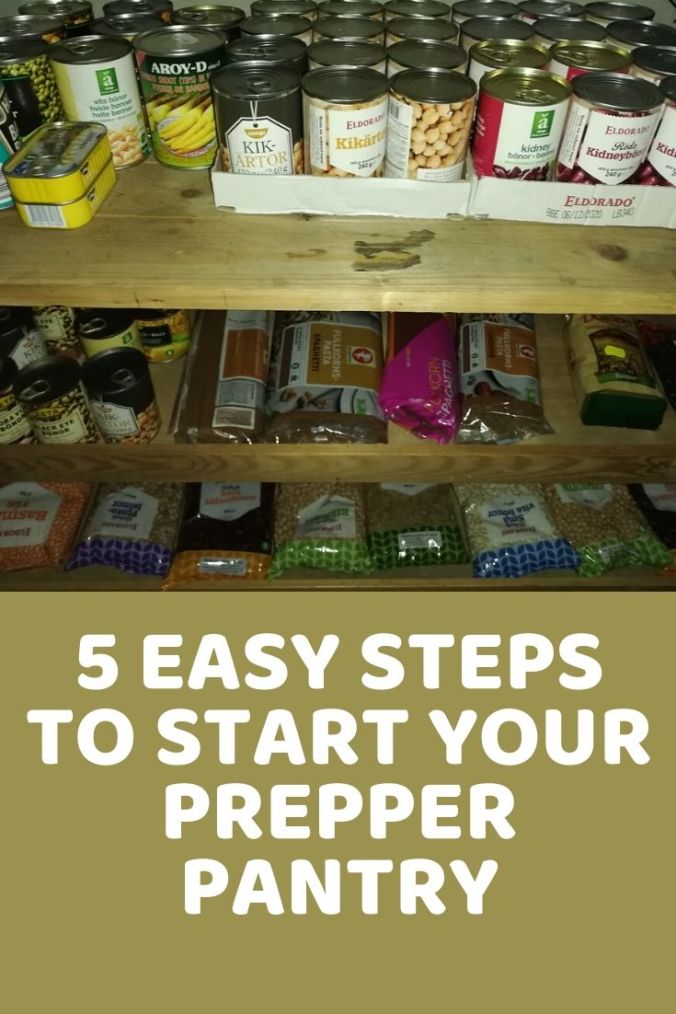
Storing food long-term is something you never want to skimp on. Proper storage makes your supplies last as long as they need to. Airtight containers will be your best friends as you build your prepper pantry. You should also decide whether or not you want to utilize a freezer for certain things. If you do, make sure you have a backup generator of some kind to keep it running if you don’t have electricity.
Growing your prepper pantry is not something that happens overnight. It’s a long-term investment in both money and time. It takes a lot of planning and thinking ahead, so it is important to have a plan to grow it over time.
Think of it as building a house. Start by building a solid foundation, then add some structure, and finally top it off with a ceiling goal. That’s how we’ll build your pantry so you aren’t caught unprepared.
If you have done any research on how to be a prepper or create your own prepper pantry, you’ve probably seen hundreds of pages of material for people that already seem to know what to do. This can be a bit overwhelming for the beginner prepper; but don’t be discouraged! Starting a prepper pantry doesn’t have to be as difficult as you think. You can easily start and maintain your own prepper pantry.
As Corona virus (COVID-19) not so slowly makes its way into major cities and small suburbs across the nation, it’s becoming increasingly more important to stay calm in this time of panic. People are hoarding toilet paper, medical supplies, and food. Others are becoming violent. It’s easy to be afraid, so try to make the effort to find some peace.
It is never a bad idea to have at least a small stockpile of long-term food storage in the event of an emergency. Inclement weather events, power outages, disease outbreaks, and other disasters could make finding food outside of your home nearly impossible. Having something to fall back on is a smart and safe plan.
As of March 11th, 2020, the Corona Virus (COVID-19) has been recognized as a worldwide pandemic. We’ve known about the virus ever since it hit China last month and I’ll admit that I didn’t take it very seriously at first, but globally it has killed 3.4% of reported cases according to WHO. Comparatively, the seasonal flu kills less than 1%. This is a real threat that it is at your door and you need to protect yourself. Identifying symptoms, too, is important so that you can get help and avoid infecting others.
Preparing for disasters should be a priority no matter where you live. Chances are that sooner or later, you’ll face some sort of disaster that will leave you without power, water, or access to buy the things you need in order to live.
What is a disaster
There are many kinds of disasters. It could be a natural disaster like a hurricane, snowstorm, flood, tornado, or earthquake. Or it could be a man-made disaster that has the power grid down or requires you to stay in your home for a few days or even weeks. Disasters can also include unemployment, sudden illness, or the death of the breadwinner in the family.
I don’t say this to scare you. I tell you this because the best way to prepare for disasters is to be aware that they can occur at any time, so you should always have what you need on hand. You must have an emergency preparedness plan, and you need to prepare your finances. Some people might think that’s paranoid thinking, but I think it’s just common sense.
Living on love
Years ago, when my kids were still small, we lived in a tent on 18 acres. Yeah, five kids living in a tent. It was a good time. But I digress…
Anyhow, we had a neighbor who planted a field of beans but didn’t have time to harvest them. He made a deal with me that if I harvested them, he would give me half. I gathered buckets and three of my kids, and we went to the field. It was hot and it was hard work, but we harvested lots and lots of beans. After bringing home our half, I canned as many as I could. Those beans kept us fed for many months (and to this day, my oldest daughter hates beans, but she didn’t go hungry).
Another elderly neighbor had planted a huge garden, but after her husband died, she just couldn’t keep up. She told us to take anything we needed. I was happy to oblige. Other people in town had apple trees with apples rotting on the ground. They were happy to have someone take the apples instead of letting them fall and make a mess. We also had friends with garden excess. They were happy to share, and we were happy to have food.
We also did a lot of foraging back then. Wild blackberries were everywhere, and the kids loved to help gather them. My oldest son would hunt and fish. We did what we had to in order to survive, but as difficult as those days were, some of my best memories are of that time. Not memories of all the stuff money was wasted on (though maybe my ex has memories of that since he’s the one who wasted all the money), but memories of experiences and things we did together to care for our family.
I guess the moral of this story is that you don’t have to spend money or be entertained all the time. Save your money and enjoy the little things. Find joy in the experiences, and you’ll be better prepared financially if disaster strikes.
Preparing for disasters at home: finances
Let’s start at home. Do you have at least a month’s worth of money stashed somewhere? Last year, Vice published an article on saving money when you’re broke. According to the article, a quarter of Americans have less than $1000 saved for emergencies. That’s pretty scary since the average monthly cost of living in the US for one adult is over $2300. And the cost of living goes up every year.
For many people, saving enough money to last for a month is not an easy task, but it’s wise to sit down and figure out a monthly budget that allows you to put a little money away with every paycheck, even if it’s only $25 a week. Too much? How about just $5? The key is to just start, even if it’s a very small amount. Put this money aside BEFORE you spend on anything else each week.
Tricks to save money
You have to be brutally honest with how you spend money. Track every penny. EVERY PENNY! Do this for a month, and if you are honest, you are very likely to see areas where you are spending unnecessarily. I’m talking about needs vs. wants here. So you really need to understand the difference. Do you NEED a Starbucks coffee, or can you survive by making coffee at home? Do you NEED to hit the drive-thru or can you pack a lunch that is going to be way more healthy anyhow?
Once you see these areas, it’s time to trim the fat. This is where most people decide that they don’t want to budget. They feel entitled to their little extravagances. Here’s the thing: you aren’t “entitled” to anything, and if you want to save money and become more self-sufficient, you’re going to make a few sacrifices here and there. They don’t necessarily have to be permanent sacrifices, but if you say you aren’t prepared for a disaster because you can’t afford it, you need to be a little more honest with yourself.
Can you cut out that gas station treat when you stop to fill up? Stop getting your nails done? Cancel a premium TV channel? Pack a lunch for work? You think you’ll feel deprived doing these things, but just think how deprived you’ll feel when you can’t even buy a bag of potatoes or rice because you have no money due to unemployment or serious injury. Focus on saving enough money to pay your normal expenses for a month. Then think about if you really need those little things you’ve cut out to save that money.
There are other tricks you can use as well. We have an empty animal cracker container (shaped like a teddy bear; it’s adorable) that has become our change jar. Every time we get change (coins), we come home and drop them in the teddy bear. This is a good-sized container, so even if it’s only partly filled, we can see that we have a couple hundred dollars in emergency money. Usually, when it’s about half full, we roll the coins and take them to the bank to cash them in. Then we either put the cash in a safe or in the bank, depending on our needs at the time.
Another trick is to start using that checkbook ledger. Yeah, I know. How old school. If you feel like a dinosaur, use a spreadsheet or even keep a note app on your phone. Just keep your bank balance noted, and when you spend anything, round it up to the next dollar.
For example, if you have a $1000 balance and you spend $10.89, round it up to $11. This will make your balance $989 instead of $989.11. That 11 cents becomes invisible, so you essentially saved 11 cents. Combine this method with the change jar, and your savings will add up quickly.
One more tick that may seem scary at first is to do a no-spend month. Do not spend anything unless you MUST spend it to survive the month. So, obviously, you’re going to pay your utility bills as well as the rent or mortgage payment. But don’t spend anything else unless you need food or medications. That’s it. See how much money you have at the end of the month. You may surprise yourself.
By the way, this doesn’t mean go have fun with the extra money. This is money to help you prepare for disasters. Your emergency fund. However, if you do this method each month, or several times a year, you may find that you can do something special each month and still have some money left to save.
Now, where do you keep your emergency money? There will be plenty of opinions on this, but we are most comfortable keeping an emergency stash in a safe, not in the bank. Think about it. If the grid goes down, how will you access money in the bank? Of course, there is also the argument that money might not even be useful, and instead, you should have things to barter. That’s another topic altogether, but it’s still wise to have emergency money on hand. If you don’t trust yourself to not spend it, ask a trusted friend or family member to hold on to it until you develop better money habits. Which you will, of course. The longer you are on this journey, the better you get at it.
Prepare your pantry
Your goal is to save up enough money to live on for at least a month in the case of an emergency. But you can also put aside some of the money to get your home ready and get your family more prepared for disasters. If you suddenly had no access to money or the grocery store, can you prepare enough food to feed your family for a month? A week?
Try this. Get a sheet of paper (or that handy note app on your phone) and take inventory of everything you have in your house that you can eat. Pantry, refrigerator, freezer, cabinets, that secret stash of chocolate in your nightstand… oh wait… let’s not get too carried away.
Look at your inventory list. Do you have stuff that you just won’t eat? Can you come up with a creative way to use it? If not, donate it or give it to your neighbor. Might be interesting to see how far around town that can of candied yams gets as it gets passed from neighbor to neighbor.
Now, throw away anything expired. Then, think about what meals you can make with what’s on hand. This is a great exercise to do before a no-spend month (or even a no-spend week) because it prevents you from overshopping. But it also gets you thinking about what you can do to survive in an emergency. I have been doing this for years, and I’m still always surprised when I do it. I always think, “Wow, I didn’t know I had that much food in the house.”
On another piece of paper, make a list of the foods you eat most often. I’m going to tell you now, if it’s mostly convenience foods, you’re probably going to have to take a closer look at your eating habits, but that’s a topic for another post. This list of foods that your family eats most is the basis for two things: First, it’s your “buy extra” list. Second, it’s your “I can grow this” list.
Buy extra
Next time you go shopping, take this list with you. Try to buy one or two of each item each time you shop, even if you don’t need it. If it’s already on your shopping list, buy an extra. If you do this each time you go shopping, you’ll start building an emergency stash of food. Just pay attention to expiration dates and rotate your pantry so you use the older items first. Spoiled food isn’t very helpful in a disaster situation.
Grow it
Hopefully you have plenty of fruits and vegetables on your list. Think about how you can grow as many of these as possible with the goal of canning, freezing, drying, etc. Even if all you can do is grow some herbs in pots, you can dry those herbs and use them for cooking. That means you can usually bypass the spice aisle at the grocery store. Some of those store-bought herbs and spices are really pricey!
Another option is to hit farmers’ markets or join a CSA. Or go to a you-pick farm. This will allow you fresh vegetables at a reasonable price. And sometimes, if you talk to growers, they will give you a better price on less-than-perfect produce that you can preserve once you get home.
Do you have an emergency fund? Do you have any tricks for saving money?





 The Practical Homestead